
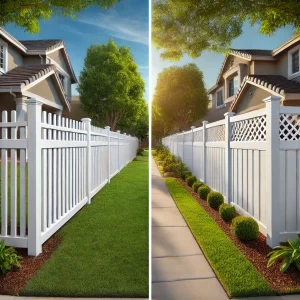
 When you’re eyeing a vinyl fence, you might wonder how it’s crafted—and monolayer extrusion is a big part of that story. Imagine a giant Play-Doh machine squeezing out a single, solid layer of melted vinyl into shapes like pickets or privacy panels—that’s monolayer extrusion in action. It’s a key process used by vinyl fence makers to churn out durable, long-lasting designs with a uniform finish. But what makes it tick, and how does it stack up? Let’s dive into the nuts and bolts of this vinyl-shaping method.
How Does Monolayer Extrusion Work?
Monolayer extrusion is a straightforward, one-layer wonder—here’s the process:
- Melting: Vinyl material—PVC powder mixed with additives like UV inhibitors—gets heated until it’s gooey.
- Shaping: An extruder forces the melted mix through a die—a metal mold—that shapes it into posts, rails, or panels—see What is vinyl fence made of?.
- Cooling: The hot vinyl cools and hardens into a solid, ready-to-use fence piece—think pickets or privacy slats.
Example: A 6-foot privacy panel starts as a molten blob and ends as a sturdy wall—all in one go.
Why Use Monolayer Extrusion?
This method’s simplicity packs a punch—here’s what it brings to vinyl fences:
Durability
- Benefit: A single, solid layer means uniform strength—no weak spots to crack.
- Why It Matters: Built to last—holds up to weather and wear—check What is the average lifespan of a fence?.
- Example: A monolayer picket shrugs off a rogue soccer ball—no splits here.
Variety
- Benefit: Shapes a range of styles—picket, privacy, or decorative—with precision—see What are the typical sizes of vinyl fence panels?.
- Why It Matters: Flexibility for your yard—custom looks without custom fuss.
- Example: A lattice-top fence gets its flair straight from the die.
Monolayer vs. Co-Extrusion
Monolayer’s not the only game in town—here’s how it compares:
- Monolayer: One layer—simpler, often cheaper, but less UV or impact oomph—see What are the types of extrusions used in vinyl fence?.
- Co-Extrusion: Two layers—tough core, UV-shielded skin—pricier but tops for longevity.
- Why It Matters: Monolayer’s solid for basics; co-extrusion wins for harsh climates.
Practical Tips
- Check Specs: Ensure fence-grade quality—not pipe-grade skimping—see What is the wall thickness of a vinyl fence?.
- Ask Your Pro: Confirm monolayer details—use 25+ Essential Questions to Ask Your Fence Contractor.
- Match It Up: Gates too—see Can I get a matching vinyl gate?.
Final Thoughts
Monolayer extrusion crafts vinyl fences with a single, solid layer—melting PVC into durable shapes like pickets or privacy panels with ease. It’s a high-quality, long-lasting choice for many styles, though it’s simpler than co-extrusion’s dual-layer punch. Pick a fence-grade monolayer, and you’ve got a winner—explore more in our vinyl fence guide or costs at Vinyl Fencing vs. Wood Fencing – Long Term Costs. Ready for a fence that’s built tough?
Related FAQs and Resources
- What is the average cost of a fence? – Budget for quality.
- What type of fence is the most durable? – Vinyl’s edge shines.
- 25+ Essential Questions to Ask Your Fence Contractor – Ask about extrusion.
Add a Comment