
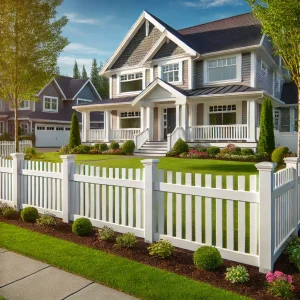
 When you’re picking out a vinyl fence, you might not think about how it’s made—but the extrusion process behind it can make or break its quality. Vinyl fences, along with goodies like siding, window frames, and pipes, come to life through two main extrusion methods: monolayer and co-extrusion. Each shapes the fence’s guts—its strength, UV resistance, and longevity—in its own way, and knowing the difference helps you spot a top-notch product. Not all extruders use the same specs, so some skimp with weaker pipe-grade formulas—buyer beware! Let’s dive into these extrusion types and what they mean for your fence.
What Is Extrusion in Vinyl Fencing?
Extrusion is the magic that turns raw vinyl into fence parts—think of it like a high-tech Play-Doh machine:
- Process: PVC powder mixes with additives, gets heated, and is pushed through molds to form panels, posts, or rails—see What is vinyl fence made of?.
- Why It Matters: The extrusion type affects durability and fade resistance—key for a fence that lasts—check What is the average lifespan of a fence?.
Types of Extrusions for Vinyl Fences
Two extrusion methods rule the vinyl world—here’s how they stack up:
Monolayer Extrusion
- What It Is: A single-layer process—PVC and additives are mixed and extruded as one solid piece.
- Pros: Simpler and cheaper—good for basic fences or pipes with low UV demands.
- Cons: Less UV protection and impact resistance—might fade or crack sooner.
- Example: A monolayer fence might bleach out in harsh sun—fence-grade needs more oomph.
Co-Extrusion
- What It Is: A dual-layer process—an inner core (strength-focused) gets a tough outer skin (UV-resistant).
- Pros: Top-tier durability and color retention—built for fences that face the elements—see Will a vinyl fence lose its color?.
- Cons: Pricier—quality costs a bit more upfront.
- Example: A co-extruded tan fence stays tan—not patchy—after a decade outside.
Why Extrusion Type Matters
The extrusion process isn’t just geek talk—it’s your fence’s backbone:
- Strength: Co-extrusion beats monolayer for impact resistance—think kids or storms—check What is the wall thickness of a vinyl fence?.
- UV Resistance: More TiO2 in co-extrusion keeps colors popping—monolayer might skimp.
- Cost vs. Value: Pipe-grade monolayer saves now but fades fast—fence-grade co-extrusion saves later—see Vinyl Fencing vs. Wood Fencing – Long Term Costs.
Practical Tips
- Know the Specs: Ask for fence-grade co-extrusion—pipe specs won’t cut it.
- Hire Smart: A pro knows extrusion quality—use 25+ Essential Questions to Ask Your Fence Contractor.
- Clean Easy: Either type stays sharp with a rinse—see What should I use to clean my vinyl fence?.
Final Thoughts
Vinyl fences come from two extrusion types—monolayer for basics, co-extrusion for the win. Co-extrusion’s dual-layer toughness and UV protection make it the champ for lasting color and strength, while monolayer cuts corners with pipe-grade vibes. Pick fence-grade quality, and your vinyl will shine for decades—check costs at What is the average cost of a fence? or dive deeper with our vinyl fence guide. Ready for a fence that’s built to last?
Related FAQs and Resources
- What type of fence is the most durable? – Vinyl’s edge stands out.
- Can I get a matching vinyl gate? – Match your extrusion.
- 25+ Essential Questions to Ask Your Fence Contractor – Ask about extrusion.
Add a Comment