
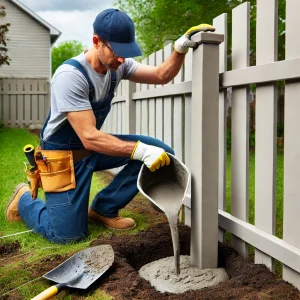
 Yes, in most cases, concrete is a go-to choice for installing a fence—and for good reason! It locks fence posts in place, creating a rock-solid base that keeps your fence standing tall for years. But is it always the best option? Not quite—some climates and setups call for alternatives. Let’s dig into why concrete usually gets the nod, when it might not, and how to make the right call for your fence.
Why Use Concrete for Fence Posts?
Concrete is the unsung hero of fence stability—here’s what it brings to the table:
- Rock-Solid Anchoring: It grips posts tight, preventing shifting or leaning from wind, soil movement, or heavy use.
- Rot Protection: For wood posts, concrete seals the base from damp soil, slowing decay—key in wet climates.
- Longevity: A concrete base boosts durability—compare lifespans at What is the average lifespan of a fence?.
Example: A 6-foot privacy fence without concrete might wobble in a storm, while one set in concrete stands firm.
When Should You Skip Concrete?
Concrete’s not a one-size-fits-all solution—here’s when to rethink it:
Tropical or High-Moisture Climates
- Issue: In humid, tropical areas (e.g., coastal Florida), concrete can trap moisture around wood posts, speeding up rot—especially with high air humidity.
- Alternatives: Use metal brackets above ground or a dry well (gravel base) to let water drain—keeps wood drier.
Loose or Sandy Soil
- Issue: In loose, shifting soils (e.g., sandy lots), concrete might crack or settle unevenly.
- Alternatives: Extra-deep posts with gravel backfill can flex better—see How do I mount a fence post?.
Note: Vinyl or metal posts? Concrete’s still king—moisture’s less of a worry.
How to Use Concrete Right
Concrete boosts stability when done properly—here’s the basics:
- Depth: Dig 2–3 feet deep (⅓ of post length)—e.g., 2 feet for a 6-foot fence.
- Mix: Use quick-set concrete (e.g., Quikrete)—pour dry, add water, and it hardens fast.
- Technique: Set posts plumb with a level, pour concrete, and let it cure (24–48 hours).
Pro Tip: Tamp gravel at the hole’s base first—improves drainage and strength.
Practical Tips
- Check Codes: Local rules might mandate concrete—or not—confirm with Do I need a permit to install a fence?.
- Ask the Pros: Unsure about concrete? Ask your contractor—use our 25+ Essential Questions to Ask Your Fence Contractor.
- Match Materials: Wood may need alternatives in wet zones; vinyl loves concrete—see Vinyl vs. Wood Fencing Costs.
Final Thoughts
Concrete’s usually the MVP for fence installs—securing posts and fighting rot for a fence that lasts. But in tropical or loose-soil spots, alternatives like gravel or brackets might edge it out. Follow manufacturer advice, check local codes, and pick what fits your setup—your fence will thank you. For more install insights, explore our vinyl fence guide or hiring tips at 25+ Questions.
Related FAQs and Resources
- What is the average cost of a fence? – Factor in concrete costs.
- What type of fence is the most durable? – Durability with concrete.