
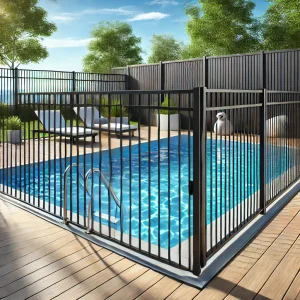
 Keeping your pool safe starts with a fence—and not just any fence, but one that meets pool code standards. These rules, designed to prevent accidents like drownings, vary by state and municipality, but they share a common goal: stopping kids from sneaking in. From height to gates, making your fence pool code compliant means hitting key benchmarks. Let’s walk through what’s typically required, why it matters, and how to ensure your fence passes muster—because a safe pool is a happy pool!
Why Pool Code Compliance Matters
Pool codes aren’t just red tape—they’re lifesavers. Drowning is a leading cause of accidental death for young kids, and a compliant fence is your first line of defense. Most codes align with standards like the International Swimming Pool and Spa Code (ISPSC), but local rules can tweak the details. Compliance protects your family, guests, and wallet—avoid fines or lawsuits with a fence that’s up to snuff. Curious about legal must-haves? Check Do I need a permit to install a fence?.
Key Requirements for Pool Code Compliance
Here’s what most states and towns demand—your local code might add extras, so double-check!
Height
- Standard: At least 4 feet tall—some areas bump it to 5 feet (e.g., Arizona).
- Why: Stops kids from climbing over—measured from the outside ground level.
- Example: A 48-inch fence keeps a toddler out, but check your town—Texas often requires 48 inches too.
Materials
- Standard: Durable stuff—vinyl, aluminum, or wood that won’t snap or rot.
- Why: Weak fences fail—vinyl’s rust-free perk shines here—see Will an aluminum fence rust like a wrought iron fence?.
- Example: A flimsy chain-link might bend; solid vinyl holds firm.
Gaps
- Standard: No openings over 4 inches—under the fence or between slats.
- Why: Prevents kids from squeezing through or under—tested with a 4-inch ball.
- Example: A 2-inch ground gap is fine; 5 inches risks a crawl-through.
Gates
- Standard: Self-closing, self-latching gates—latch at least 54 inches high.
- Why: Stops accidental entry—gates swing out, not in, and lock automatically.
- Example: A gate left ajar? Self-closing fixes that—vinyl gates excel here—see Can I get a matching vinyl gate?.
Maintenance
- Standard: Regular checks—fix loose posts, broken slats, or stuck gates.
- Why: A sagging fence isn’t compliant—upkeep keeps it safe—see 7 Steps to Maintaining a Vinyl Fence.
- Example: A wobbly post fails code—tighten it with concrete—see Should concrete be used when installing a fence?.
Practical Tips
- Check Local Codes: Rules differ—California might demand 5 feet, Florida 4—call your building department.
- Hire Smart: A pro knows codes—ask via 25+ Essential Questions to Ask Your Fence Contractor.
- Measure Right: Posts and panels must align—check sizes at What are the typical sizes of vinyl fence panels?.
Final Thoughts
Making your fence pool code compliant keeps it safe and legal—hit at least 4 feet tall, use tough materials, mind the gaps, lock those gates, and stay on top of upkeep. It’s all about peace of mind for your pool area. Codes vary, so check locally, but these basics set you up right. For more fencing know-how, explore our vinyl fence guide or durability at What type of fence is the most durable?. Ready to fence in safety?
Related FAQs and Resources
- What is the average cost of a fence? – Budget for compliance.
- What is the average lifespan of a fence? – Longevity matters.
- 25+ Essential Questions to Ask Your Fence Contractor – Ensure code expertise.