
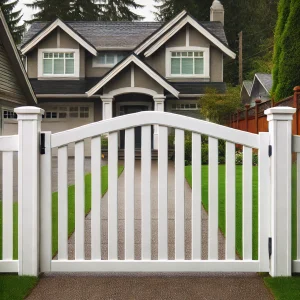
 A sagging vinyl gate can turn your sleek fence into an eyesore—but it doesn’t have to! Vinyl gates are tough, but over time, weight, weather, or wear can pull them out of shape. The good news? With smart design and a little care, you can keep your gate swinging smoothly for years. From sturdy frames to clever braces, let’s explore how to stop sagging in its tracks—whether you’re DIY-ing or hiring a pro, here’s what works.
Why Vinyl Gates Sag
Gates take a beating—constant opening, closing, and gravity tug at them. Common culprits include:
- Weak Frames: Thin or flimsy vinyl bends under pressure.
- Poor Hinges: Cheap hinges sag over time—especially on wide gates.
- Weather Wear: Heat, cold, or wind can stress joints if not built right.
Preventing it starts with quality—let’s see how.
Ways to Prevent Sagging
Here’s your toolkit to keep that gate upright—tried-and-true methods for strength and stability:
Use a Heavy-Duty Gate Frame
- How: Opt for thicker, heavy-wall vinyl extrusions (e.g., 0.140+ inches)—check What is the wall thickness of a vinyl fence?.
- Why: More mass resists bending—think of it like upgrading from a straw to a steel rod.
- Example: A 6-foot-wide gate with a beefy frame holds firm where a thin one droops.
Reinforce with U-Channel and Rivets
- How: Rout uprights for snug rail fits (no gaps), square the gate, add U-channel bracing on each side, and double pop-rivet the corners.
- Why: Locks the structure tight—eliminates flex and deflection.
- Example: A riveted gate shrugs off wind; an unbraced one twists.
Add Extra Support
- How: Install diagonal braces (corner-to-corner) or a center support bar across the gate.
- Why: Braces distribute weight—keeps wide gates from bowing.
- Example: A 5-foot gate with a diagonal brace stays level—unsupported, it sags inward.
Use Self-Closing Hinges
-
- How: Swap standard hinges for self-closing ones—adjustable tension keeps alignment.
Why: Auto-closes the gate and reduces strain—meets pool codes too—see What should be done to make a fence pool code compliant?.
- Example: Kids leave it open? Self-closing hinges snap it shut—no sag risk.
Regular Maintenance
- How: Lubricate hinges with silicone spray yearly; tighten screws or adjust alignment as needed—see 7 Steps to Maintaining a Vinyl Fence.
- Why: Keeps hinges smooth—stops uneven pull that leads to sagging.
- Example: A squeaky hinge fixed early avoids a droopy gate later.
Practical Tips
- Start Strong: Order a gate with heavy-duty vinyl—ask your supplier about thickness.
- Hire Right: A pro can build it sag-proof—use 25+ Essential Questions to Ask Your Fence Contractor.
- Add a Wheel: For wide gates, a gate wheel takes the load off hinges—extra insurance!
Final Thoughts
Preventing a vinyl gate from sagging is all about strength—start with a beefy frame, brace it smartly, use self-closing hinges, and keep up light maintenance. A little planning keeps it swinging straight for decades—no droops, no fuss. Match it to your fence—see Can I get a matching vinyl gate?—and enjoy a gate that lasts. For more vinyl perks, explore our vinyl fence guide or costs at What is the average cost of a fence?.
Related FAQs and Resources
- What is the average lifespan of a fence? – Longevity with care.
- What type of fence is the most durable? – Vinyl’s strength shines.
- 25+ Essential Questions to Ask Your Fence Contractor – Build it right.